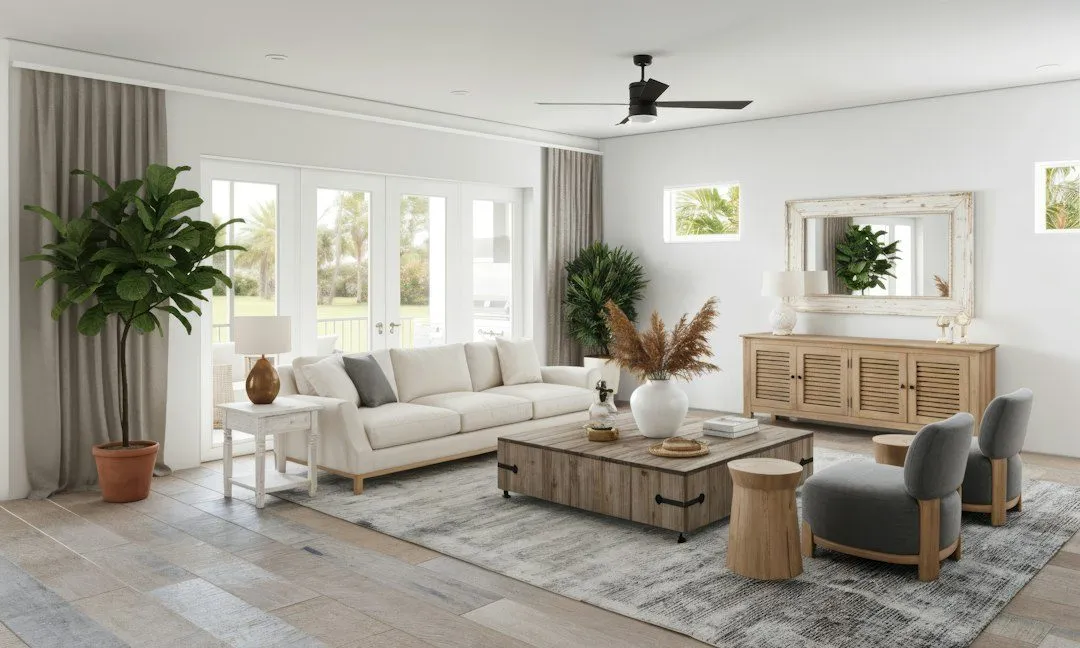
Organic modern interior design, done the quieter way, begins not with a furniture vocabulary but with a material one. Stone, plaster, linen, timber: the room follows from these, not from a mood board of silhouettes.
What the phrase actually describes
“Organic” is the easier half. It points to natural materials — unprocessed, drawn from the earth, variable in the way living things are. Stone, clay, wool, wood. Not imitation, not composite.
“Modern” is the discipline. Minimal structure. Edited composition. No period ornament, no accumulated decorative layers. The two qualities together produce rooms that are simple in form and warm in material. That combination is harder to achieve than it sounds.
Where the trend went wrong
The version of organic modern that dominated design media in the early 2020s conflated the aesthetic with the idea. Sculptural sofas, stacked burl wood, arching floor lamps — forms that read as signals of a moment, not choices with a longer logic. Those interiors have begun to date.
The quieter version has no such tells. It depends on material quality rather than silhouette. A plaster wall in a hand-applied finish. A floor in rift-sawn white oak. A linen curtain with proper weight. These choices are not trend-responsive. They age well because they are rooted in craft, not fashion.
Material is the design move
In rooms built around this sensibility, the selection of surfaces does most of the work. Venetian plaster and limewash bring depth to walls without decoration. Natural stone — limestone, honed travertine — grounds a room. Timber carries grain and warmth.
The specification logic runs outward from the surfaces. Natural-fiber fabrics sit alongside furniture chosen as object rather than gesture. Hardware comes in unlacquered or burnished finishes — metals that will develop a patina over time. Some of the most interesting material in this register comes from European craft makers who prioritize character over novelty.
Texture over color
Where color-led design makes its moves through hue, organic modern makes them through texture. Smooth plaster against heavy wool. A brushed oak floor against a matt-glazed ceramic vessel. These contrasts generate depth without introducing palette complexity.
The difference is legible even in a photograph. A room with flat surfaces and limited material reads as thin even if the furniture is expensive. Add a plaster wall, a natural-fiber rug, a linen curtain with visible weave, and the room gains weight. Not from color. From surface.
This sensibility suits coastal homes in Orange County particularly well. Strong, directional light rewards material quality; the coast provides that in quantity.
Restraint is not emptiness
Rooms built this way often appear less furnished than they are. That legibility is intentional. Each piece earns its place; none is filler. The density is lower than in a more decorative interior, but the quality of each element is correspondingly higher.
The same logic runs through modern coastal interior design. The quiet of a good room comes from what’s left out. Organic modern applies the same discipline but brings warmth through material rather than through absence alone. In the studio’s work, both approaches often sit together — the material-first sensibility carries directly into warm minimalism for a coastal home.
How the studio approaches it
The material-first reading of organic modern shapes how the studio sequences a project. Surface selection comes first: walls, floors, and the fixed architecture. Furniture, textiles, and objects follow — each chosen for quality and for how it sits in the room. The longevity of the result is part of the brief.
No statement pieces chosen for their silhouette. No arching burl. Just rooms that will read as right in ten years for the same reasons they read as right now.
That is the foundation of full-service interior design: developing a room that holds its character over time, rather than executing a trend.
Thinking about the direction for your home? Get in touch.